Showing posts with label Folk Lore. Show all posts

Tuesday, September 18, 2018

The Indigo Lady and other Specters

Ghost of the Lake by Silvia Vanni
Whatever happened to the Indigo Lady
Whoever drew her to the sea?

Whatever happened beneath the oaks so shady
Whoever could her killer be?

The Sea Islands are full of ghost stories. Widows seeking their soldier husbands, children buried alive during tuberculosis outbreaks, ghosts of civil war dead and lynching victims, and in one case a french jester named Gauche. A good ghost story is as Southern as collard greens and sweet tea, and you can't sit in one place long without hearing about someone's supernatural encounter. This is why the Low Country Crawl needs a plethora of spooks for the players to encounter.

The Indigo Lady

About fifty years ago, when the Islands were still being tamed, a woman came from across the sea to make or rather increase her fortune. Pale as the moon and smooth as a milkmaid's skin, the radiant Lady Elmyra Pinckney was a beauty and a force to behold. With her came a veritable army of craftsmen, architects, and engineers who constructed Azurholm, the palatial estates where Lady Pinckney made her home. Also following Lady Picnkney was a hoard of debtors, indentured servants, and slaves upon whose backs she would build her empire.

Next to rice, the Islands' greatest cash crop is Indigo, and this is all thanks to Lady Pinckney dominating and taming the local species. Within a few years of her arrival, Azurholm was among the richest and most productive plantations on the whole coast. This wealth gained Lady Pinckney friends and enemies aplenty, all those wishing to capitalize on her success or steal it away. She held marvelous galas and feasts, attracting suitors by the dozen turning them all away with a smile and a wave. Many a wife AND husband were made jealous by her wiles and wealth.

It was at one of these galas that disaster struck, though accounts of the event are as varied as the people telling of them. Some say it was an accident, a misplaced fireplace grate and a smoldering carpet. Others claim it was arson wrought by a stilted lover or a jealous rival. Still others say it was revolution, after all it was from human suffering that she made her fortune. Regardless, within minutes Azurholm was consumed, leaving Lady Pinckney and her party-goers standing under the oaks, helplessly watching.

Some witnesses say that Lady Pinckney wandered off under the canopy of moss and oaks by herself. Others claim a tall grey figure walked beside her, hand upon her dropped shoulders. It was the last time any would see her alive. The next day, her body was found upon the shore, crab nibbled, sodden, and blue as a fresh bruise. Her estate and lands were auctioned off, and it wasn't long before Azurholm was being rebuilt for a new master. Only, it seemed to have other plans. Materials would go missing, accidents would occur with increasing frequency and severity. Azurholm would change hands again and again, and each time it would refuse to be completed. Every time it would nearly reach the end, a mysterious fire would consume it, leaving only the stone front stairs.

Eventually Azurholm was left to go to seed. The estate was consumed by the wilderness once more and the grounds of the mansion left to rot. But this does not mean Azurholm was abandoned.

Ever since her death, Lady Pinckney, or as the locals have started calling her, The Indigo Lady, would be spotted wandering the estates and even as far as the coastal settlements. Blank white eyes, a sodden gown, and ethereal skin the deep blue almost purple of indigo, her specter roams the island at will, bringing fear and confusion in her wake. On nights where the sea-fog and the tides are high and the moon shines through it all, witnesses claim to have seen Azurholm itself sitting in its rubble, the solid stone steps leading to an open doorway. Some claim that some foolhardy folks have walked up those steps and simply vanished, though others think that there are any number of mundane dangers that could result in a disappearance on The Lady's Island.

Hop-Frog, Artist Unknown

Gauche the Dwarf

Early in the the colony's history, a number of religious refugees fled from the old world to find a safe home in the new. Among them was a dwarf, as in a little person not a "Dwarf," who was a jester by trade. He was known as Gauche and had a reputation for being a smarmy little bastard. After spending several months at sea with him, it is of little surprise that the new colonists were feeling their tempers thin from his constant pestering and pranks. There are several stories of how he met his final fate. Some say that attacks by natives left him skewered on a spear. Some say the captain of the colonial landing party had him hung for a particularly stabbing jest. Some say he was cannibalized as the initial colony began to fail. Regardless, what remained of him was dropped into an unmarked grave on the riverfront. 

Two hundred years later, a wealthy doctor built his home upon those lands, a mansion based upon the castles across the ocean in the old country. He and his family were not long in the house before his young daughter obtained a new imaginary friend, a short man with bells on his shoes that dressed in motley. Thinking their child merely saw depictions of jesters in one of their history books, the child's parents wrote it off. Soon, however, various inconveniences and issues began to arise. Roasts would vanish entirely from ovens, chandeliers would be set to swinging, plates would crash off shelves, small footsteps would run up and down stairs in the middle of the night, and always just at the edge of hearing there would be the tinkle-tinkle of small bells.

At first the doctor and his wife thought that their daughter had begun a series of youthful mischief, but as she always blamed the "small man" they became increasingly concerned. When they finally demanded to see this "small man" who has been up to mischief, a series of loud knocks came from the basement. This happened several times over before they realized it was some sort of coded message. The doctor consulted his library and decoded the message, "I am Gauche from across the sea. The basement reminds me of my home that I will never again see. Though I be now a ghoul, I am not cruel but I shall suffer no fools."

Since then, the Castle, as it came to be called, has been through many hands. Oft time Gauche would make his presence known as pranks or befriending young children, but never anything more dangerous than a few thefts and a little mischief.

The Actual Chapel of Ease

The Chapel of Ease

Y'know what? I'm not going to even try to modify this one for a semi-setting neutral RPG thing. I'm just going to tell you about the Chapel of Ease as it is, because dang its spooky. Okay, so this picture above is the burned out remains of the Chapel of Ease. It was built in the 1740's as a place of worship for slaves and local plantation owners who could not reach the main parish church every Sunday. As you see it is of a distinctive white coloration. This is from the Tabby method of construction. log frames and earthworks were built up into something of a mold and then a simple concrete made of oyster shells (both whole and crushed/burned into lime) and sand was poured in. While a common construction method in an area low in clay and high in oyster shells, what makes this already cursed is the fact that many of the oyster shells used in these tabby constructions were taken from Native American Shell rings. These were midden piles of generations worth of discarded shells that sat on sites of (often forcibly) abandoned native encampments.

The building was known as the White Church, for its coloration, and was used as a church until the Reconstruction Period when it was heavily damaged by a forest fire. Several hauntings have been known to reside in and around this burnt out church. Perhaps one of the best known is the Land's End Light, a will-o-wisp type entity that stalks up and down the road outside of the Chapel. Some claim it is the spirit of a Confederate or Union soldier whose head was chopped off in an ambush attack. Some say it is the spirits of slaves who were hung from the Hanging Tree, a massive old oak with a "conveniently" straight high limb for the awful deed. More modern tales say it is the spirit of a soldier who died in a brawl at the nearby Fort Fremont or even more disturbingly the lost souls of a dozen children who died when their bus crashed into the marsh.

Another curious spirit that haunts the area is more strongly documented. In the picture above you can see a small square brick out-building. First off, the fact that it is red brick is a sign of opulence because in the 18th and 19th centuries, clay had to be imported at great cost to make brick. This mausoleum was build by and for the Fripp family, one of the wealthiest land-owning families in the region. A number of Fripps were buried there and there is at least one rumor of a child who was sealed alive inside of it who had been in a tuberculosis induced coma. During the Civil War, the door to the mausoleum was forcibly removed in search for treasure but was abandoned after an unsuccessful looting. The entrance was later bricked up, but the following day the bricks were found to have been removed and piled neatly beside the building. After several more rounds of this, the bricks were found to be scattered in front of the mausoleum and covered in raking scratch marks. Since then the mausoleum has been left alone.

Some claim to have heard quiet but fervent prayers when standing in the Chapel. Others claim to have seen a woman in white with a limp child in her arms, walking among the old tombstones. Many other minor hauntings are reported and attributed to the area, but many of them are bleed over from other local hauntings.
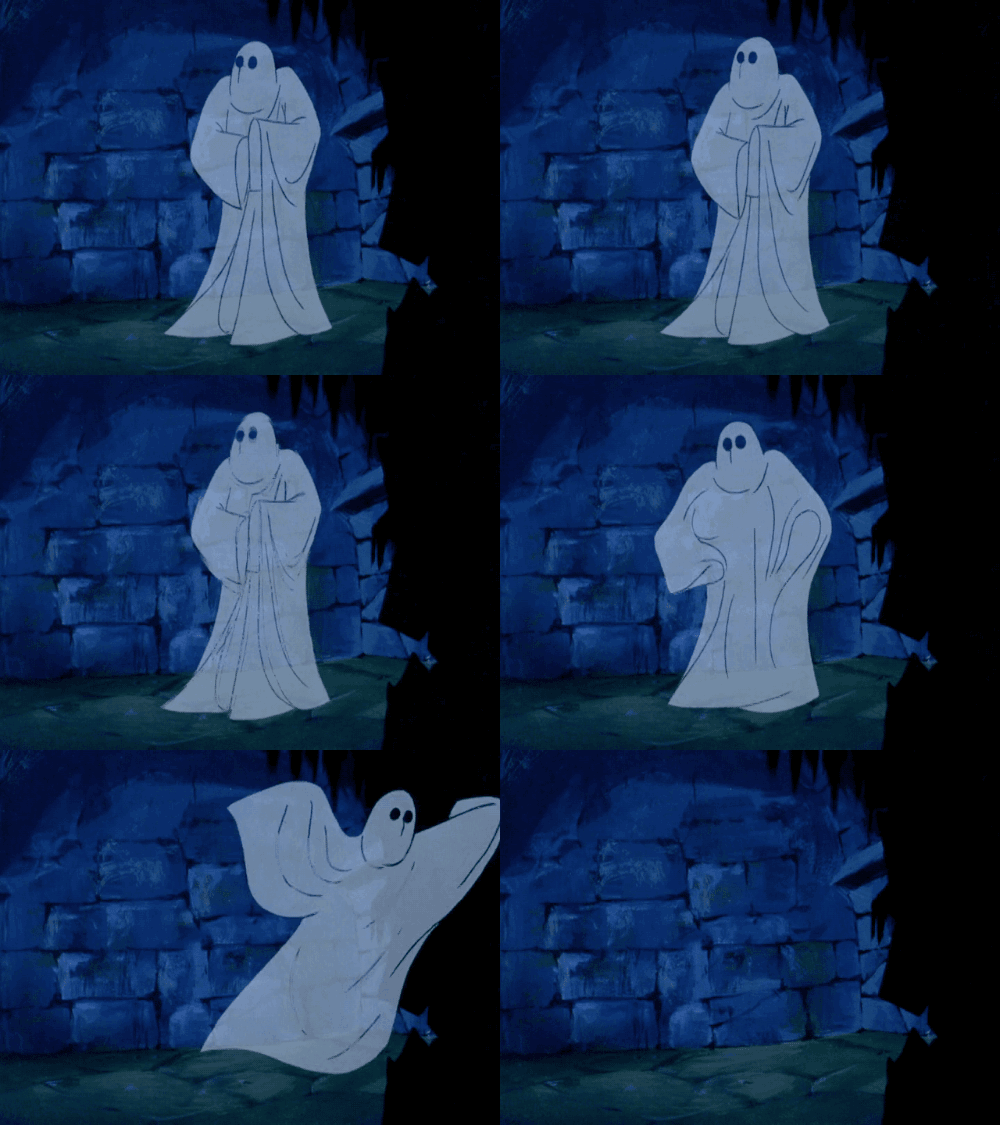
Is he even trying any longer?

Random Haunt Generator

Because it isn't a good OSR blog without a random table right? Roll three times, get a ghost, a location, and a personality. Ghosts are old fashioned so they get old fashioned terms for their personalities. 


Roll
Spirit
of
Personality
1
Spirit
Coffin Point
Argute
2
Ghost
Devil’s Bend
Bellicose
3
Ghoul
The Praise House
Boorish
4
Specter
Beguiler’s Bluff
Contumacious
5
Wraith
Land’s End
Didactic
6
Apparition
Frog Thicket
Effulgent
7
Phantom
Briar Hill
Feckless
8
Poltergeist
Greymoss Manor
Garrulous
9
Shade
Sweetgrass Swamp
Histrionic
10
Shadow
The Tabby Chapel
Invidious
11
Revenant
Shale Cape Lighthouse
Jocular
12
Boggart
Lake Hartwell
Lachrymose
13
Spook
The HMS Goldfinch
Mordant
14
Haunt
Deepning Fen
Propitious
15
Fetch
The Standing Stones
Quiescent
16
Wight
Whitemoor
Rhadamanthine
17
Geist
St. Abhai Marsh
Strident
18
Hag
Bass Creek Bridge
Tremulous
19
Lost Soul
Woodland Cemetery
Voracious
20
Wisp
The Old Well
Zealous

Wednesday, August 29, 2018

Low Country Point Crawl Prep: Barrier Island Generator

Driftwood or treant corpse?


So, I've gone off the deep end and I've decided to start an attempt to create a pointcrawl, having no personal experience running a hexcrawl, a pointcrawl, or even creating my own dungeon from scratch! So I've decided to create something based upon my home area in the Low Country region of the South Carolina and Georgia coast. A nice home for my Root Doctor and a great place to set some of Skerples' GROG Pirate hack.

One of my primary goals, of course, is to make the Point Crawl itself, which I have sketched out over several handfuls of crumpled steno-pad sheets. I've got locations, an approximation of distances and travel times, etc. etc. I just so happen to be shit at using various mapping and art programs, so until I get a little more practice posting something up digitally is on hold. However! I do have a fun little resource here that I plan to use.


The Sea Islands, also called Barrier Islands, there are many dozens of coast-hugging, small, constantly changing islands of various sorts. From little sandbars that come and go with erosion, to larger islands with established vegetation, to islands that only a few fisherman know of and treat like their own little sanctuary. Erosion, habitation, rice plantations, and the fishing industry have all contributed to this ever changing landscape and thus I felt it would be a great chance for a random table.

When your island hopping adventurers decide to go off the beaten path, bring their boat down river, or get horribly lost in the marsh, roll a few times on the table below. There is a 2-in-6 chance of the island already being inhabited by "civilized" or "native" folk of one type or another, otherwise it is uninhabited, exploitable wilderness.
Roll
Adjective
Noun
Size
Environment
1
Savage
John’s
Small
Sandbar
2
Red
Jenny’s
3
Black
Crane
4
Timid
Bull
5
Old
Snake
Marshland
6
Dark
Alligator
7
Long
Buzzard
8
Short
Toad
9
Saint
Wren
Rocky
10
Sweet
Helena’s
11
Green
Harold’s
Medium
12
Lost
Folly’s
Forested
13
Last
Point
14
Dead
Turtle
15
Hermit
Palm
Structures
16
Big
End
17
Little
Crab
18
Crazy
Head
Other
19
Surly
Man’s
Large
20
Young
Lady’s

Sizes

Small- Between a few acres and up to a quarter square mile, a Small Island could be a small sandbar that vanishes in the high tide or it can be large enough for a small hamlet and a dew docks. Islands like these are perfect places for buried pirate treasure, lonely hermits, a lagoon of hungry alligators, village of inbred marsh-dwelling rednecks, island get away of rich elite, an isolated lighthouse etc.

Medium- More then a quarter square mile and less than twenty square miles, with around ten being the standard. These islands are big enough for a reasonably sized town or a large hunting reserve or a plantation. Could also be the locations of sea-forts, pirate lairs, sea turtle nesting sites, native burial grounds, hidden lizardman marsh-villages.

Large- More than twenty square miles less than forty. The largest of the Sea Islands are between 60-70 square miles are are primary setting pieces for the Point Crawl, so any randomly generated Large Island should be less in size than those. Large Islands of this nature tend to have a reason they are not on the main map, infested with wild creatures, inhabited by dangerous natives, the site of a horrible magical accident, a secret government facility etc. But it could also very well be simply be place that the still recent colonizers have yet to explore.


Enviroments

Sandbar: Truly the most common sort of Barrier Island, these islands are more or less just a pile of sand and slit that have formed due to current and wave patterns. More often than not these form at the mouths of various rivers and creeks that meet the ocean and tend to vanish and reappear with the changing of the tides. What might seem like a safe sandy shore to rest upon might be ten feet underwater a few hours later. A large sandbar would be something like a desert island, possibly with a few stubborn bits of vegetation holding on and likely crawling with filter feeding crabs trying to beat the tides. 

Marshlands: With Barrier Islands, you generally encounter two types of marshland, Salt Marsh and Freshwater Tidal Marshes with Salt Marshes being predominate. Salt Marshes have two zones, a Low Marsh and a High Marsh. The Low Marsh is a biome that is affected by the daily tides and is dominated by a rich muddy of "pluff mud" and a thick growth of halophyte (salt resistant) plants such as cord grass. The thick almost sludge-like mud made of decayed plant detritus and silt makes it difficult for large animals to traverse, but encourages a large echo system of creatures and algae who feed upon the decaying nutrient rich mud and are in turned preyed upon up the chain. Oysters, snails, shrimp and crabs make up most of the bottom of the food chain with predatory birds, otters, large fish and turtles make up the upper tier, although occasionally alligators come down river for a snack. In the rivers around marshlands it is not uncommon for sharks, porpoises, manatees, and dolphins to also be present.

High Marsh, on the other hand, is only affected by the bi-monthly Spring Tides that are much higher than daily tides. These areas tend to have high salinity soil and much of its vegetation is stunted or specialized such as sweetgrass or needlerush. Creatures living in this area tend to be scavengers who obtain most of their food from the low marsh then retreat to the high marsh at high tide. Raccoons, opossums, nutria, snakes, coyotes and such would be common here.

A large enough Marshland Island might have enough height to have swampy areas or even small groves of pine and oak where the tides do not affect their growth.  

Rocky: Actually very uncommon in areas that form Barrier Islands due to the manner that currents interact with the shoreline, a rocky island in this case would be made of a sort of erosion resistant rock that hasn't been beaten into sand by the ocean. More often than not these would simply be jagged outcroppings, more a threat to shipping lanes than adventurers. But perhaps there is sunken treasure nearby or sahuagins laying traps or big dye producing snails worth a few gold a piece. Very large rocky islands are aberrant for this region and might be artificial or volcanic in origin. 

Forested: Often found on larger islands or islands that have a higher than average height, forested Barrier Islands tend to have a ring of marshland around them while the interior tends to be either swampy in composition or have trees able withstand some level of salinity and sandy soil. Expansive Live Oaks, Tidewater Cypruss, Sweetgum, Yellow Pine, Mangroves, Palms of various sorts, and all kinds of robust ferns are the most common large plants here with almost all of them festooned with spanish moss. The make up of these islands are often impacted by the needs of nearby civilized peoples as Live Oak is highly valued as a ship building resource and Yellow Pine are prime home construction material. Forested islands might be inhabited by black bears, bob cats, white tailed deer, wild boar, turkey, fox and so forth. In the fresh water lagoons common near these forested islands, alligators often amass in sizable congregations. 

Structures: This island has been cleared of most of its natural environment to make space for human or humanoid habitation. It might be a military base or a plantation or a pirate lair or a whole small urban center. These are not always necessarily inhabited as the threat of disease from mosquitoes, regular flooding, hurricanes, and other natural phenomena is ever present. Expect there to be several docks and possibly small bridges to other nearby islands.

Other: This is the space for the weird oddball islands that fantasy might throw at you occasionally. If you roll Other, roll again on the list below or make something gonzo up.


Roll
Other Island
1
Roll on Environment again, nominally that result, actually a giant turtle. 1-in-6 chance of being a massive stinking corpse.
2
Repeating Island: Island is caught in a time loop and repeats the same day over and over again. Must break the loop to escape, no time apparently passed outside.
3
Haunted Island, can't spit without hitting a headstone and waking up a ghoul
4
Tip of an underwater mountain, sea-dwaves have hollowed out the underside.
5
Illusional Island: can only step foot on it if you are also an illusion.
6
100-Year Island: Avalon or some shit, only appears for one night every hundred years.
7
Doll Island: Weird hermit has covered this island in hundreds of dolls.
8
Animal Island: Left overs from weird government experiments, this island is dominated by a single out of place species. Roll once on the Biological Mutation Chart, all of the dominate animal species possesses that mutation
9
Prison Island: This entire island is a prison complex for dangerous criminals or lepers who don't know how to swim.
10
Statue Island: It..it's all statues. All the way down.
11
Floating Island: This island is literally floating, an enterprising madman might have put a big ass mast and rudder on it one of these days. 
12
Flying Island: Laputa or some shit. If its inhabited, folks are probably just here for a visit, if it isn't old security drones might be still wandering around.
13
Eyland: IT'S NOT AN ISLAND, IT'S A GIANT EYE, REVERSE REVERSE!
14
Castle Island: A single tower peaking up from the water, the rest is below.
15
Woven Island: Made out of reeds, trapped air, and maybe a bit of faith, this artificial floating island is half raft half hamlet. Prone to fire. 
16
Anti-Island: The reserve of an island, this is actually an extremely deep hole, may or may not occasionally produce a maelstrom. 
17
Sargasso Gyre: Due to weird current patterns, this artificial island is made up of sargasso, ship wrecks, and detritus. 
18
Mimic Island: Looks like beach resort paradise with friendly inhabitants, beautiful sights, and comfortable beds. Oddly no animals, even insects. Inhabitants are always touching the ground in some way. Everything is actually a single massive mimic, mouths can appear anywhere.
19
Cannibal Island: Everything living on this island can only survive by eating creatures of the same time. Rations don't work unless they are made of whatever you are made of. The Island itself eats other islands every few score years.
20
Artificial Island: A perfect metal cube of terribly large proportions with no sign of rust. What's inside? Where's the door?

Tuesday, August 14, 2018

OSR: Root Doctor

OSR: Class:The Root Doctor

Dr. Buzzard as imagined by Monsieur le Battlier


Root Doctor, Conjure Doctor, Two Head Man, Hoodoo Doctor. These are the practical practitioners of the magical world. Through observation and tradition, they find what works and they use it. Generally speaking they don't particularly care why it works, they just know that it does. The Root Doctors of my home area pull from West African, Native American, Central European, and Levant traditions, but you can bring together a grab bag of any sort and it would work just fine.

Also, I won't lie, Skerples' Weather Witch does a very good job as a Root Worker

Class: Root Doctor
Starting Equipment: Purple tinged spectacles, fine linen clothing, dagger
Starting Skill: Herbalism

For every Root Doctor template, gain +1 on saves versus Fear and +1 on any reaction rolls when lying.

A: Root Casting, Mantle,+2 Spells, +1 RD
B: Chewing the Root,+1 Spell, +1 RD
C: Bury the Root,+1 Spell, +1 RD
D: Mojo Hand, Two-Headed Conjurer, +1 RD


Low John Root, looks like poop, tastes like ginger, and the best lawyer money can buy.

Root Casting: Unlike a Wizard, you do not cast magic by caging spells into books or shooting them out of your brain. Unlike a Sorcerer, you do not cast magic through the sheer force of your will, though you are likely a force of personality on your own. Your magic comes from the lingering magic that infuses every part of the world. You know how to combine seemingly innocuous objects in just the right way to cause them to express their magic. You gain +1 Root Die per Template representing materials on hand to cast your spells. Because Root spells are tied up in materials, RD used do not return to your pool but they also do not cause Mishaps or Dooms to occur. When exploring a hex or foraging, you have a 1-in-6 chance of gathering enough materials to replenish RD equal to 1d[# of Templates]. Base RD return after a long rest, in the form of incidental finds in pockets and packs.

Several Root Spells can be reversed, or Buried. Knowing the spell means you know the buried version as well.

Mantle: The Mantle of a Root Doctor is the ultimate source of their power, it the secret knowledge of the workings of the Root. It is either inherited from a parent or teacher or it is gifted to them by some spiritual source. For your player character, roll on the table below to see your new title and the power behind it.

Roll
Mantle
Effect
1
Bug
Roll twice for spells, choose.
2
Snake
Roll twice for reaction rolls, take better.
3
Hawk
Keen Vision, 2-in-6 Chance of noticing secret doors and traps.
4
Crow
Instantly appraise the worth of anything shiny.
5
Turtle
+2 Defense, -1 Movement
6
Alligator
+2 Attack on first attack
7
Raccoon
Immune to effects of rotten food, +4 save against Disease
8
Opossum
1/week when reduced below 0 HP, instead remain at 1 HP and, as long as you do not move, appear as dead.
9
Toad
Secrete 1 dose of Bufotoxin daily, grants either 1: Pleasant buzz +1 to saves for 1 hour, or 2: Heart Palpitations  -2 to Defense for 1 hour
10
Buzzard
+1 Root Die

Chewing the Root: By literally chewing on the material components for Root spells, the Root Doctor is able to affect all within their sight with their power. The Root Doctor may either add or subtract the number of Root Die invested, to all rolls within their sight. Furthermore while Chewing the Root, the Root Doctor may take no other action. If taking any other action but spitting the Root out (thereby ending the effect) the Root Doctor must save vs. Poison, failure ending the effect and causing them to swallow the components and be affected by a supernatural mutation.

Bury the Root: By burying the components of a Root spell, the caster may set something of a magical trap. The spell and RD invested will be set to activate under conditions laid out by the Root Doctor. These conditions must be under seven words long or it fails. As long as the Root is buried and inactivated, the Root Doctor will not naturally regain those invested RD and can only obtain RD via foraging. A Root Doctor can deactivate their own buried Root or invest RD to create a counter charm to deactivate or weaken another's buried root.

Mojo Hand: By wrapping up the components of a Root spell in a specially prepared bag, the Root Doctor may pass on the spell to another person for later casting. The Root Doctor my either invest their base RD or the RD obtained via foraging, but cannot invest more than 2 RD in a single Mojo Hand. Base RD invested do not regenerate as long as the Mojo Hand is active and/or uncast. Mojo Hands naturally degrade and lose potency after [dice] weeks. Mojo Hand function as scrolls but their RD is always burned and additional RD cannot be invested after the fact.

Two-Headed Conjuror: A Root Doctor of this caliber has their head both in the spirit world and the mortal world. Choose: Learn 6 additional spells or become a Boo-Hag, gaining their Flight, Incorporeality, Steal Breath, and Claw abilities but also gaining their weaknesses to counting, boodaddies, salt, and the color blue.

Minerva, widow of Doctor Buzzard,
is known to some for her role in Midnight in the Garden of Good and Evil

Spells:

1. High John The Conqueror
R: Touch T: creature D: [dice] hours or until used
A literal root spell, this creates a temporary talisman from a type of jalap root called John the Conqueror Root. The bearer of this root is enchanted to "get lucky." This will allow the user to have a +2 bonus to any seduction relate rolls and will ensure conception after any sexual congress. The user can alternatively use up all the luck at once and add [Sum] to any roll where luck or gambling is the primary determining factor of the roll.

Buried: A Buried High John The Conqueror can have an inverse effect, causing sterilization and bad luck instead.

2. Hotfoot Powder
R: 5x[sum] feet radius T: Area D: [Dice] Hours
A temporary protection against those who would do you harm, Hotfoot Powder is spread in an approximate circle around an area and creates an impenetrable ward against disembodied undead. When cast, the caster can also identify a single unique being of 2x[dice] HD to be similarly warded against. If the caster, or whomever spreads the Hotfoot Powder, steps over the circle, the magic is nullified.

3. Honey Jar
R:[dice] Miles T: Creature Type D: [sum] Hours or until candle is extinguished, whichever is first
By adding honey (or anything else sticky and sweet) to a prepared candle, the Root Doctor creates a psychic lure for a type of creature chosen at the candle's creation. All creatures within the affected area that meet the Root Doctor's specifications must save vs. magic or feel a strong pull towards the candle. Creatures of [dice] HD or lower are helplessly drawn, dropping everything to move to the area around the candle. More powerful creatures will still feel the draw, but will not be compelled to answer it. If the Root Doctor knows the true name of a target, they may focus the Honey Jar only on that target  and affect [dice]*2 HD.

Buried: By using a vinegar or something else bitter and sour, the Root Doctor can cause this effect to create a sense of disgust instead of attraction. Although not warded like Hotfoot Powder, creatures instinctively avoid the area and can only be forced in. More powerful creatures similarly feel intense disgust but can overcome that feeling to approach.

4. Butting (or Flipping)
R: Touch T: 1 Creature D: [sum] turns  or until candle is extinguished, whichever is first
By taking a specially prepared candle, flipping it upside down, digging out the wick, and lighting it, a Root Doctor may inverse a curse or negative effect for as long as the candle remains lit and the target creature carries the candle. The candle must be invested with more RD than either the MD(SD, RD, whatever) invested into the curse effect or equal at least half the HD of the creature the curse effect originated from.

5. Live Things
R: 200' T: 1 Creature with flesh D: 0 to [sum] rounds
Target takes [sum]+[dice] damage either instantly or divided out over [sum] rounds as insects, small snakes, spiders, and other small crawling creatures force their way out through the target's skin. If the target does [dice]d4 damage to itself with a slashing weapon or is affected with a counter curse type ability, this spell will end prematurely.

Artist Andy Tate as Doctor Buzzard


6. Jitter Heart Powder
R:30' T: Cone D: [dice] Rounds
A powder made of finely crushed reagents (arsenic being a major component), Jitter Heart causes severe heart palpitations in those affected by it. It can be tossed over an area and function as an inhalant. Targets with HD less than 1/2 [sum] must save vs. Poison or half their Movement and Defense for [dice] rounds and take 1d6+[dice] damage. If a single [sum] HD or less target should be affected by the whole spell (such as it being mixed into a drink or be blown directly up their nose) the target must save vs. Death or instantly perish, still taking [sum] damage and halving their Movement and Defense on a successful save.

Buried: A reversed Jitter Heart Powder can be used to shock a target unconscious due to injuries back into fighting form for a short time. When used on a creature with Fatal Wounds, it temporarily heals [sum]/2 Fatal Wounds and brings the creature back to [dice] HP. However after [sum] rounds, the target must Save vs. Con. A successful save brings them back to 0 HP and the amount of Fatal Injuries the target previous had. A failed save doubles their initial number of Fatal Injuries and calls for another roll on the Death and Dismemberment table.

7. Black Cat Vanishing Bone
R: 0 T: Self or 1 Creature D: [sum] rounds or until dispelled
As Invisibility, except you must keep the properly prepared bone of a black cat in your mouth the duration of the spell and are therefore unable to speak coherently.

Buried: If ground instead into a powder and thrown at an invisible target, the target is made visible for [sum] rounds.

8. Poison Drawing Coin
R: 0 T: Creature or Object D: 0
By taking a silver coin with a hole pierced through the middle, one may detect and draw out poison. Placing the coin against the foot of a target or onto a suspicious object (such as a liquid) will cause the coin to tarnish and go black if the target is poisoned. 1 [dice] allows the caster to detect poison, 2 or more [dice] allows them to attempt to draw it out. In roll over mechanics, use the invested to make the save the poison requires. In roll under mechanics start with 4d6 and subtract a d6 for every [dice] invested over 1 to a minimum of 1d6. The poison will pour through the hole in the coin and can possibly be collected for use.

Buried: If a whole coin is used instead of a pierced coin, the target instead has any check against poison penalized by [dice] for [sum] hours.

9. Jack-Ball
R: 0 or [dice]x[sum] feet T: [dice] Questions or 1 type of material D: 1 round per question or for [sum] rounds
The Jack-Ball is a small pendulum usually made out of yarn or cloth, with the ball end full of special herbs. The herbs attract a spirit (called a Jack) to inhabit the ball and it will give simple answers to questions or act as a dowsing pendulum.

As a device for divination, it will give "Yes, No, and Unsure" answers to [dice] questions, but the spirit is not omnipotent and is only knowledgeable about the general area that the Jack-Ball was created in. The ball will sway to the left for No, to the right for Yes, and turn in a circle for Unsure.

As a dowsing device, the Jack-Ball is presented with a sample of a material that the user wants to find. If there is more of that material within range, the Jack-Ball will point towards it for the duration of the spell. It will only point towards the largest amount of the material so, for example, if it is presented with iron it is going to point at the huge iron door in range, not the hidden scythe trap in the wall.


10. Two Headed (Wo)Man
R: 0 T: Self D: [dice] x 10 minutes/Permanent
As Wizard Vision, except it can only be cast on oneself via application of prepared eyedrops. The caster can also mitigate the Permanent aspects of the spell by wearing purple tinted spectacles.

Buried: Reversing this spell instead causes the caster to be completely blind to the supernatural and eldritch for [dice]x10 minutes, thereby making them immune to appearance related or gaze abilities from monsters but also rendering those creatures invisible to the caster.

A selection of Anointing Oils used to empower mojo hands and conjure candles.


Notes:
Chewing the Root is something that used to happen a lot in the South Carolina Lowcountry. Usually defendants in court cases would hire a Root Doctor to Chew the Root (specifically a root called Chewing John) and it would hex the judge and jury into being confused, flustered, and unable to make good decisions.

Burying the Root is a common practice used as a deterrent or as a curse. By burying the Root on someone's property, they are constantly under the influence or the threat of that root's malintent. I've personally seen cases where individuals were unwilling to go home for fear that someone has buried a Root on their property.

High John the Conqueror is one of many similarly named roots that are often multipurpose.  High John is usually used luck, Low John is used for sex, and Chewing John or Little John is used for influencing decisions, mostly for influencing courts as said above.

Poison Drawing Coin is one of the many methods that a silver dime can be employed, usually as a protective charm. Silver dimes minted during a leap year work best, so Mercury Dimes tend to be the preferred coinage for rootworkers.

Jitter Heart Powder actually comes from an instance in my home county. There was an overwhelming number of people not passing the medical tests during the Korean War draft in the area and Sheriff McTeer, the White Root Doctor mentioned in the previous hoodoo post, went to investigate. It was found that one of the local root doctors had been proscribing a powder to folks as a means of making their heart have temporary palpitations and help them dodge the draft. It also caused several people to get seriously sick because a major component in the powder was arsenic.

Generally speaking with a lot of these spells, the root Doctor would "dress" the components of the spell by anointing them with oils and go through a series of magical incantations. The interesting thing about the incantations though is that all Root Workers recognize that it is less about what is said and more about how it is said. It is about cadence and letting it flow from you in an impromptu way. For a lot of Root Workers who are often also Baptists or Methodists, their incantations sound a lot like a a particularly energetic and fiery minister's sermon. Many of these Root Workers see the bible as a source of magic and Moses as the penultimate "Conjure Man." Other Root Workers, however, come from different traditions, but still use many related items.